Advertisement / Buying Guide
Strength Training Guide
Building a Strength Training Setup? Here's What You Need to Know
For experienced lifters, a setup is both physical and structural. The room should support repeatable technique and efficient loading, while the program determines which work matters, how it progresses and where fatigue is worth spending.
This sponsored guide may contain commercial links to third-party retailers. Product availability, pricing and promotions may change.
The central idea
A Better Setup Starts With How You Train
Effective strength training is not about owning more equipment or accumulating more exercises. It is about extracting more useful training stimulus from the work already being performed. That requires a clear objective, measurable progression, repeatable execution and a realistic fatigue budget.
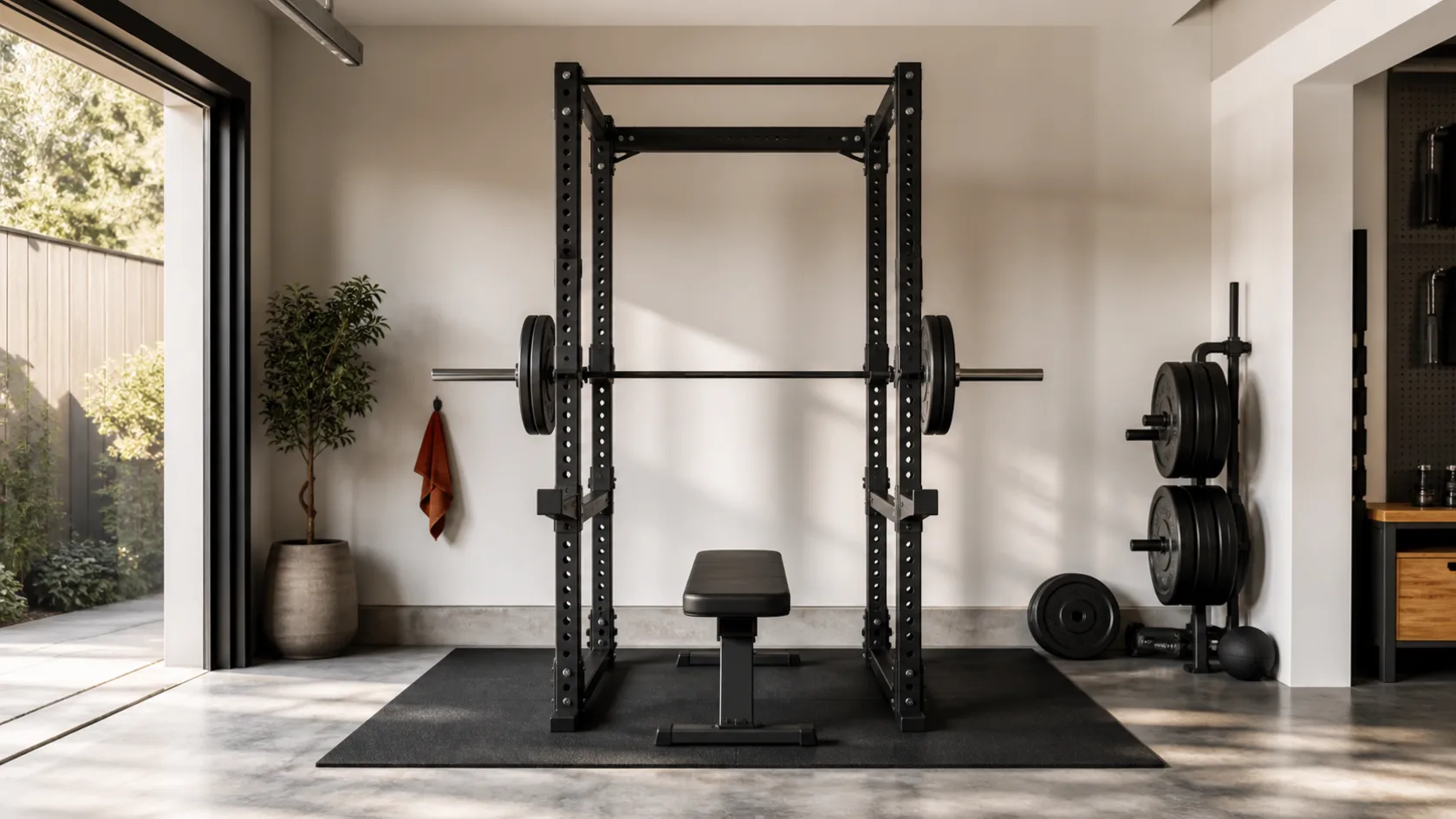
The physical environment matters because it can reinforce those qualities. Consistent rack heights, accessible plates, predictable bar choice and uncluttered movement paths reduce setup friction. They cannot replace sound programming, but they can make good programming easier to execute.
The training framework
How to Get More From Your Strength Training
More productive training starts by deciding what the current block is meant to improve. Every exercise, loading choice and accessory should then earn its place against that priority.
Train with a clear adaptation in mind
A block may emphasize maximal strength, power, technical proficiency, work capacity or hypertrophy-oriented accessory work. One priority can lead while other qualities are maintained.
Progress what can be measured
Load is only one option. Repetitions, sets, range of motion, execution quality and training density can also progress when they serve the program.
Manage volume and intensity together
Total work, loading and frequency interact. Adding work without considering later sets and sessions can reduce training quality.
Prioritize high-value movements
Primary lifts express the objective. Accessories should address a defined technical, muscular or volume need rather than extend the session.
Protect working-set quality
Specific warm-ups, adequate rest and repeatable setup help preserve technical consistency when important work begins.
Reduce training friction
Rack configuration, plate storage and access to common tools should shorten transitions without rushing demanding efforts.
Specificity first
Start With the Movements You Actually Train
Exercise selection should reflect the discipline and the block. A powerlifter may organize the week around specific squat, bench and deadlift exposures, then use variations and accessories to support those lifts. An Olympic weightlifter may prioritize competition lifts, derivatives and supporting strength work. A functional-fitness athlete may require a wider movement pool and deliberate conditioning integration.
The shared principle is specificity: the environment and exercise menu should support what must be practiced consistently. Specialty movements can be valuable, but novelty is not a programming objective. Rotation works best when it changes a stimulus deliberately while preserving a way to judge progress.
Programming variables
The Variables That Make Training More Effective
These variables operate as a system. Adjusting one may change how the others should be managed, so context matters more than a universal prescription.
| Variable | What it controls | What to watch | Practical adjustment |
|---|---|---|---|
| Intensity | Difficulty and loading | Technique and repeatability | Adjust load |
| Volume | Total training work | Useful work versus excessive fatigue | Add or remove sets or repetitions |
| Frequency | How often a movement is trained | Session quality and recovery | Redistribute weekly work |
| Exercise selection | Specific training stimulus | Relevance to the objective | Prioritize high-value movements |
| Rest intervals | Quality of repeated efforts | Drop-off between working sets | Extend rest when required |
| Progression | Long-term overload | Whether performance is moving | Progress one variable deliberately |
Volume, Intensity and Frequency Need to Agree
Hard sessions are not automatically productive sessions. Loading determines the character of each effort, volume shapes the total dose and frequency distributes that work across the week. If all three rise together without a programming reason, working-set quality may fall and fatigue may spill into later sessions.
Experienced athletes can often get more from training by redistributing existing work rather than adding to it. A second exposure may improve technical practice, but only if the volume and intensity of each exposure remain recoverable. The useful question is not “How much can fit?” but “How much supports the intended adaptation while keeping priority work repeatable?”
Progress What Can Be Measured
Progressive overload does not require adding weight every session. Depending on the phase, progress might mean an additional repetition at the same load, more consistent bar speed, cleaner execution, a controlled increase in range of motion or completing planned work with less performance drop-off.
Choose the progression variable before the block and record working-set performance. That creates a stable comparison rather than relying on how a session felt in isolation. Changing load, volume, exercise and rest structure at once can make the result difficult to interpret.
Build the Training Session Around Priorities
Primary technical or competition-specific work
Place work requiring the greatest specificity and attention where it can be performed with the intended quality.
Main strength work
Use loading and volume that support the block objective without compromising execution for its own sake.
Secondary compound work
Reinforce a related pattern, exposure or range while accounting for fatigue already accumulated.
Targeted accessory work
Select accessories for a defined purpose and scale them around the demands of primary work.
Conditioning where programmed
Place conditioning according to the main strength objective and demands of the training week.
Session closeout
Record performance, restore the area and note adjustments relevant to the next exposure.
The order can change with the discipline and program. The environment should make the highest-priority work easiest to execute consistently.
Session efficiency
Make Every Working Set Count
Warm up specifically for the priority movement rather than turning preparation into a separate workout. Use enough exposure to establish positions, timing and readiness while avoiding fatigue that competes with programmed sets.
Keep setup repeatable: the same rack height, bench position, plates and collars remove avoidable variation. Organize what is needed before demanding work starts. Use rest appropriate to the effort and watch for meaningful performance drop-off rather than hurrying because the clock is running.
Record planned working sets and execution. Session length should be driven by useful work, not filler. If an added exercise has no clear role and reduces the quality of what follows, its cost is greater than the minutes it adds.
Exercise selection
Primary Work vs. Accessory Work
Both can matter, but they operate under different priorities.
| Role | Primary work | Accessory work |
|---|---|---|
| Main purpose | Drive the priority adaptation | Support weaknesses or additional volume |
| Placement | Early in the session | Usually after priority work |
| Exercise selection | Highly specific | More flexible |
| Fatigue budget | Protected | Managed around primary work |
| Progress tracking | Strongly emphasized | Depends on exercise and purpose |
More Training Is Not Automatically Better Training
Junk volume, redundant accessories and excessive warm-up work all spend from a finite fatigue budget. The cost becomes obvious when priority sets lose technical consistency, planned loading must be reduced without intent or the next important session begins before quality work can be reproduced.
Fatigue is a normal part of training, not something to eliminate. The aim is to allocate it toward work that advances the block. Removing a low-value exercise, rotating a demanding variation or reducing redundant sets can improve the remaining work without making the program easier in any simplistic sense.
Training flow
Make the Space Support the Session
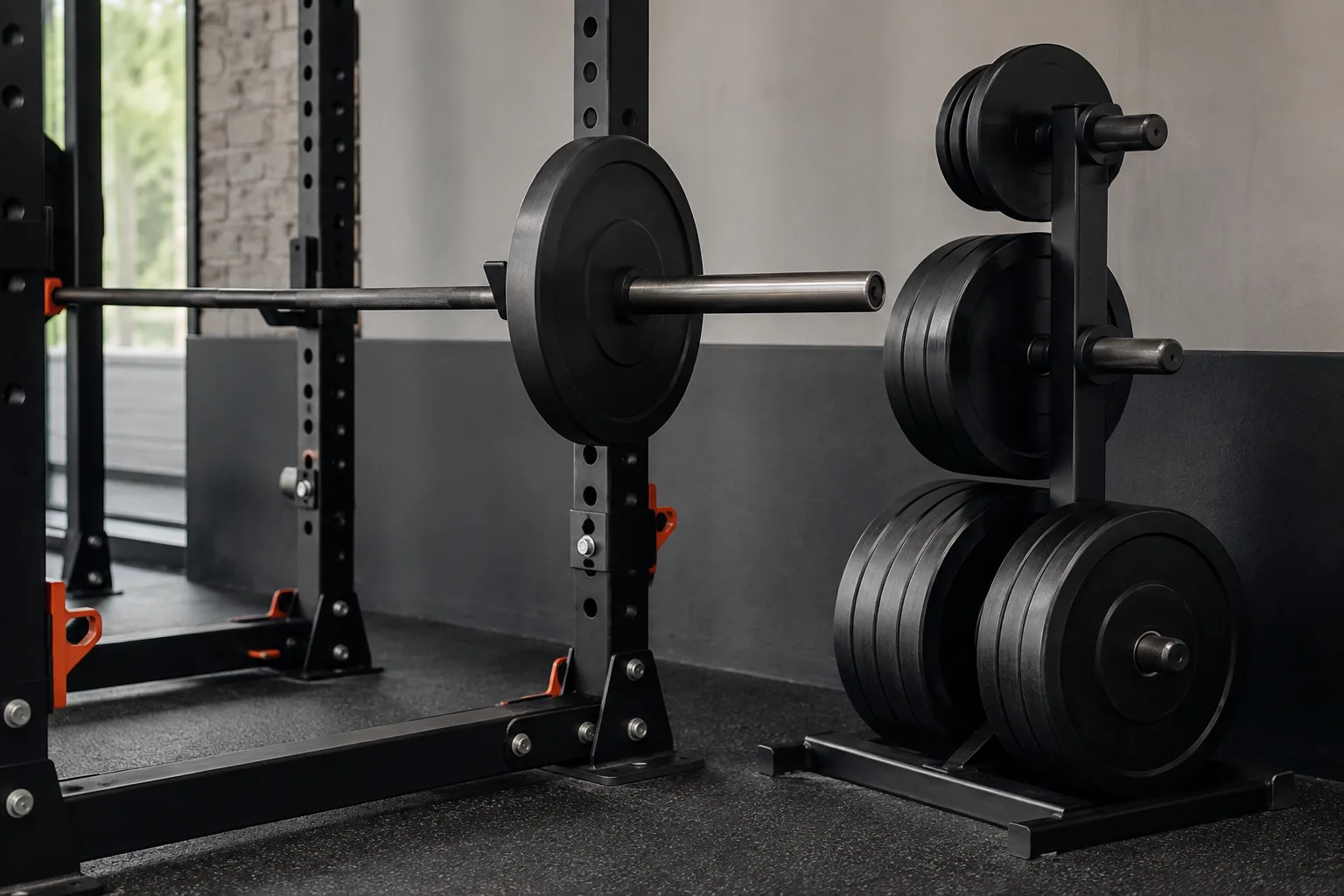
The room should reduce decisions and unnecessary movement between sets. Keep plates near the rack or platform, maintain predictable rack and safety settings, and place common accessories where they are used. Clear bar paths and walking routes matter more than filling every wall.
Allow room for discipline-specific work and avoid equipment that must be moved repeatedly before priority lifts. A well-organized space improves training economy: fewer changes, less searching and more attention for execution.
Supporting infrastructure
Where Equipment Actually Makes a Difference
Buy equipment to solve training constraints—not to create new ones. Useful additions support movements and loading patterns already in the program.
01
Rack configuration
Safeties, consistent rack heights and intentional attachment placement support repeatable setups and training flow.
02
Barbell selection
Choose for specificity and consistency. Specialty bars should solve an actual programming need.
03
Loading and plates
Useful increments and organized plates make prescribed loading faster and repeatable.
04
Bench and accessories
Stable positioning and relevant accessories support programmed work. Equipment without a role adds clutter.
Safety hardware, platform space, storage and conditioning tools deserve the same test: do they improve execution, progression or training flow? Compare current options by purpose, compatibility, space and budget.
View current equipment optionsIntegrate Conditioning Without Compromising Priority Work
The useful question is not simply whether to own an air bike, rower, sled or jump rope. It is where conditioning fits relative to the primary strength objective. Mode, placement and dose should reflect the discipline and the fatigue already created by strength work.
Conditioning can sit within a session or elsewhere in the week. The choice depends on which quality has priority and whether one modality interferes with another. Equipment is secondary; choose the tool after the intended training effect and scheduling constraint are clear.
Product discovery
Build a Setup Around the Way You Train
Once priorities are clear, equipment becomes easier to evaluate. Look for pieces that support movements already in the program, allow useful progression and reduce unnecessary setup between working sets.
Compare specifications, compatibility, regional availability, pricing and shipping terms before purchasing. Promotions and availability may change.
Explore training equipmentThe takeaway
The Bottom Line
The most effective training setup is not the one with the most equipment. It is the one that makes high-priority work repeatable, progression measurable and unnecessary friction minimal.
Define the adaptation, organize the session around it and manage the fatigue created along the way. Then evaluate equipment by how well it supports those requirements.
Support the program
Make the Training Environment Work for the Program
Explore equipment that supports the movements, loading and session structure already built into the training plan.
Explore training equipment Availability, pricing and shipping options vary by product and region.